What to see in Longyearbyen
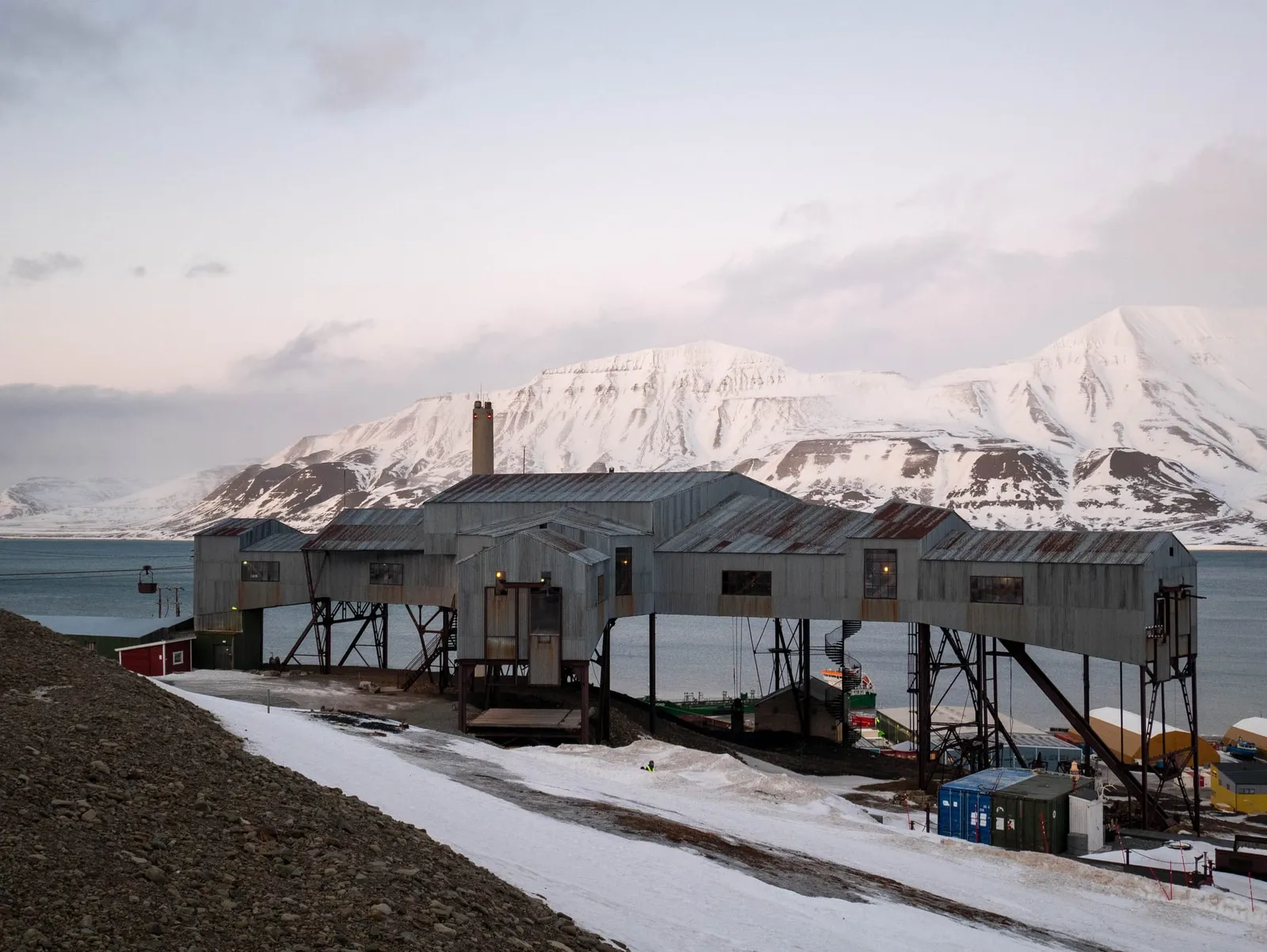
Photo: Julianfoto, CC BY-SA 4.0

Longyearbyen is small enough to walk round in a day, and most of what there is to see tells the same story: a coal-mining town at 78° north that is slowly becoming a town of tourism and research. Start with the museum, then look up. The old mines, the cableway towers and the cableway centre are all around you on the slopes above the houses.
Most of it is in or near the centre, and the rest is reached on guided trips. Don’t walk past the polar bear warning signs on your own; see Polar bear safety. Many museums and public buildings ask you to take your shoes off at the door.
Museums
Svalbard Museum
If you only have time for one thing in town, make it this. The permanent exhibition, A Changing World, covers 400 years of whaling, trapping, exploration and coal mining alongside the animals and plants of the tundra and the ice edge. There are fossils, a mine tunnel children can crawl through, and a shop with maps and Arctic books. A visit takes less than half a day.
The museum is in Forskningsparken, the research park, at Vei 231-1. It is open every day from 10:00 to 17:00, with a guided tour at 10:30 on weekdays. Adults pay NOK 160, students NOK 110, and children go free.
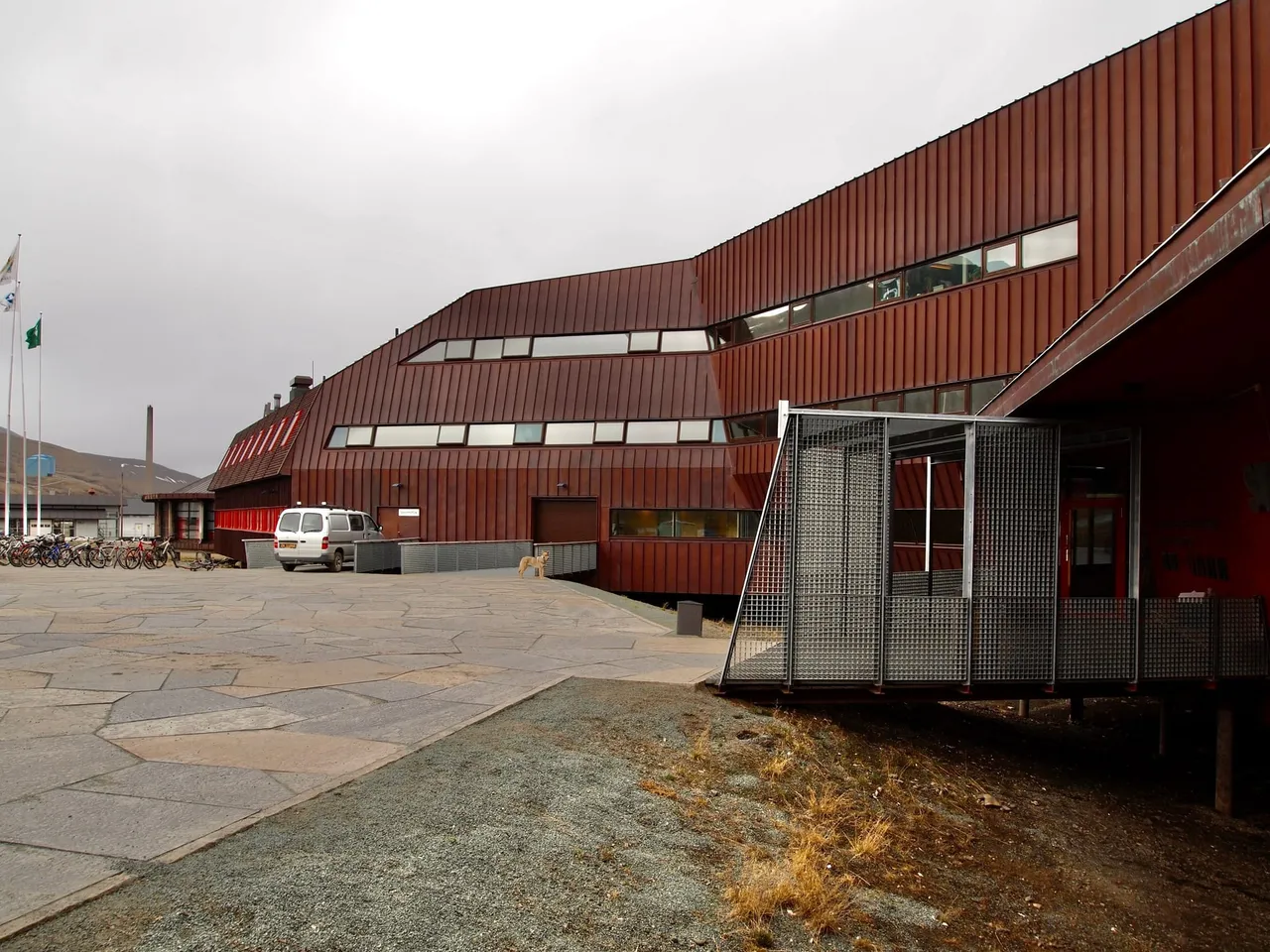
Photo: In Vitrio, CC BY-SA 4.0

North Pole Expedition Museum
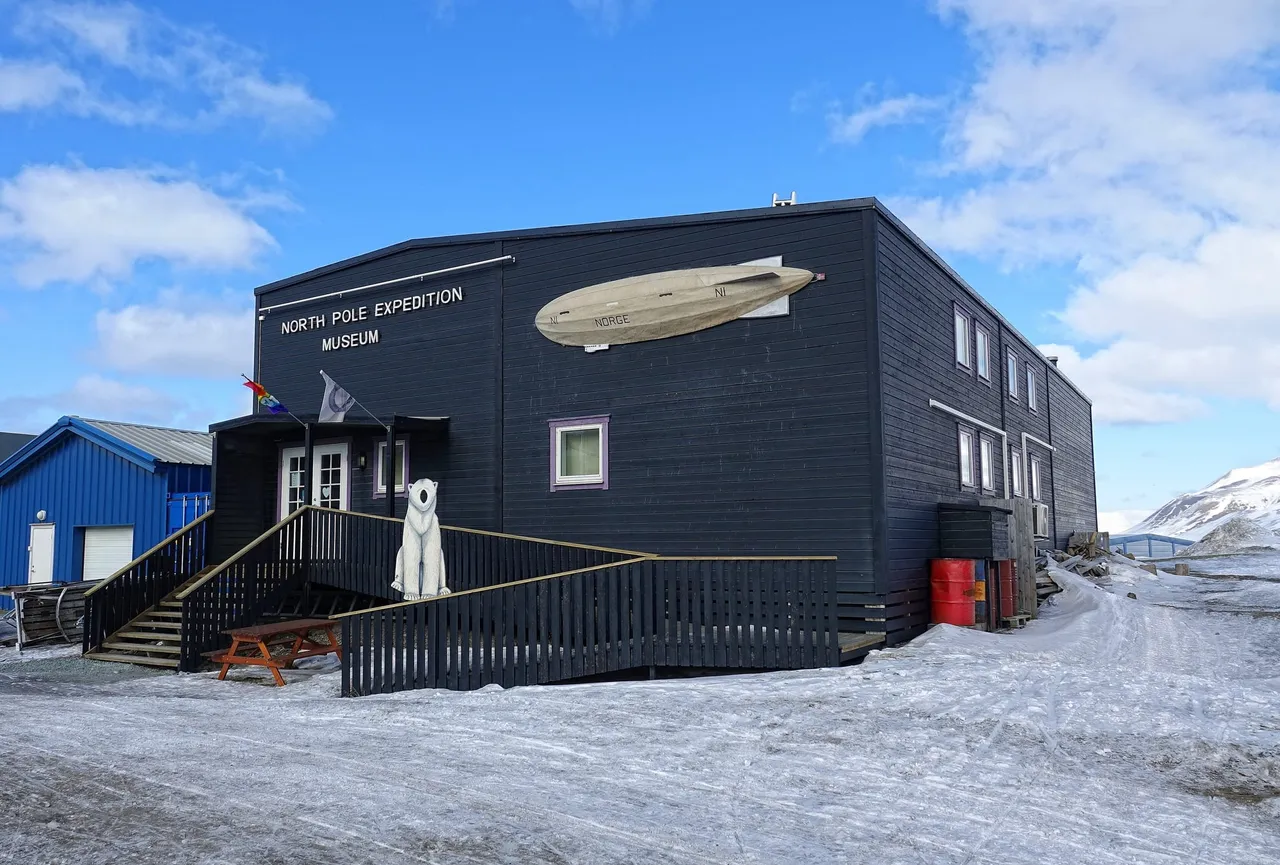
Formerly the Spitsbergen Airship Museum, this museum near UNIS and the fjord tells the story of the race to the North Pole. Much of it is about the airships America, Norge and Italia, but it also covers expeditions on skis, with dog sleds and by boat. Over two floors there is original expedition film, photographs, telegrams, newspapers and models.
It is open daily from 9:00 to 17:00 between 1 February and 30 September, and closed from October to January, when groups can visit by arrangement. Tickets are NOK 150 for adults and NOK 75 for children.

The mining town
Coal was the reason Longyearbyen exists, and mining only ended in 2025. All traces of human activity from before 1946 are protected by law, which includes much of what you can see from the streets. Look, but don’t climb on or take anything from the old structures.
The cableway towers and the cableway centre
The wooden trestles you see striding up the valley and across town once carried coal on cables from the mines to the harbour. The first section was built in 1907, and the system grew as new mines opened, until lorries took over in 1987. The towers are protected and are now one of the sights of the town.
The hub of it all was Taubanesentralen, the cableway centre, built in 1957 on the site of the original station. It still stands on its stilts above the centre of town, and inside it is little changed since it closed. From the top there are views over Longyearbyen, Adventdalen, Adventfjorden and Isfjorden.
- Summer (May to September): open Monday to Friday, 09:00 to 15:00. Buy tickets ahead or on the spot.
- Winter (October to April): guided tours only, Monday to Friday at 10:00 and 14:00. Book ahead.
- Price (2026–27): NOK 400 for adults, NOK 300 for seniors and children aged 10 to 15. Children under 10 go free with their parents. At least two guests are needed.
- Good to know: there are 30 steps up to the entrance and no toilets.
Mine 3
Mine 3 is the only coal mine in Longyearbyen you can go into. It’s near the airport, and tours pick you up from your hotel. The tour takes about three hours. You’re given a coverall, helmet and headlamp, and walk about 1.5 km through the workings, past the old equipment and into the low coal seams, some of which you crawl through.
- Tours: daily at 09:00 and 13:00, in English and Norwegian. Book ahead; at least two guests are needed.
- Price (2026): NOK 1,090 for adults, NOK 850 for seniors (67+) and NOK 700 for ages 12 to 15.
- Limits: the minimum age is 12, and it isn’t suitable if you’re severely claustrophobic.
- Dress warmly. The mine is in permafrost, and it’s below freezing inside.
The mine also holds the Arctic World Archive, a store for digital data, which the tour passes.
Mine 2, the old mine building clinging to the mountainside above town, is closed to visitors for safety reasons, but you can see it from the valley.
Svalbard Global Seed Vault
The Seed Vault opened in 2008, about a kilometre from the airport and 130 metres above sea level. Nearly a million seed samples from more than 4,000 species are stored at −18 °C in three vaults 120 metres into the mountain, as a back-up for the world’s crops. The light installation on the entrance and roof, Perpetual Repercussion by Dyveke Sanne, is lit up in the dark.
You can’t go inside. Guided sightseeing and hiking trips stop at the entrance, which is the only part that is visible, and that’s the way to see it.
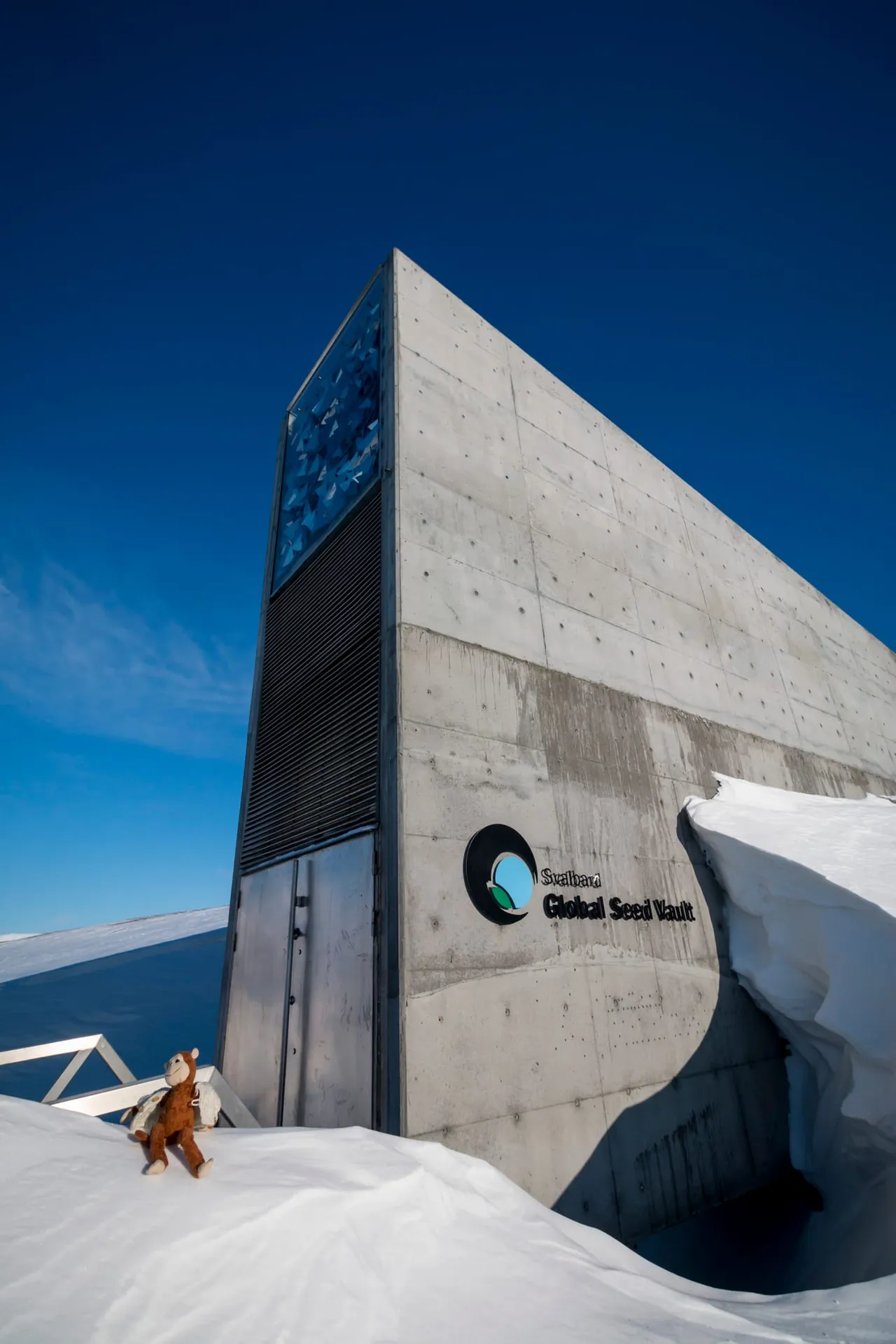
Photo: Tiq, CC BY-SA 4.0

Art and culture
- Nordover Art Centre & Cinema, on the pedestrian street at Vei 225-2, carries on from Galleri Svalbard, which closed in 2021. It shows changing exhibitions curated by Nordnorsk Kunstmuseum, and has a permanent exhibition of Kåre Tveter’s paintings of the Svalbard light. Its 25-minute film about Svalbard’s art and culture is included with your ticket. There is also a café and a small cinema. It’s open every day, all year, from 11:00 to 17:00.
- Spitsbergen Artists Center is in Nybyen, at the top of the valley, in a former miners’ store from 1947. It hosts artists in residence, exhibitions and a craft shop. Entry is free, and it’s open Tuesday, Thursday and Sunday from 12:00 to 16:00, or by appointment. It’s about a 30-minute walk from the centre along the main road, and still inside the area where you can walk without polar bear protection.
Svalbard Church
The red wooden church on the hillside is the world’s northernmost civilian church, and it belongs to the Church of Norway. It is usually open around the clock, and visitors are welcome to sit, light a candle or have a cup of coffee by the fireplace. There’s a small shop selling local crafts. The first church in Longyearbyen was burned by German soldiers in 1943.
The old cemetery
The cemetery on the slope below Platåfjellet, about 800 metres south of the church, has been used since 1917. Seven of the men who died of Spanish flu in 1918 are buried here. In the 1990s, scientists were allowed to open their graves to look for the virus, which the permafrost might have preserved. Coffin burials are no longer allowed in Longyearbyen; only urns are buried today. The old graves are protected cultural heritage.
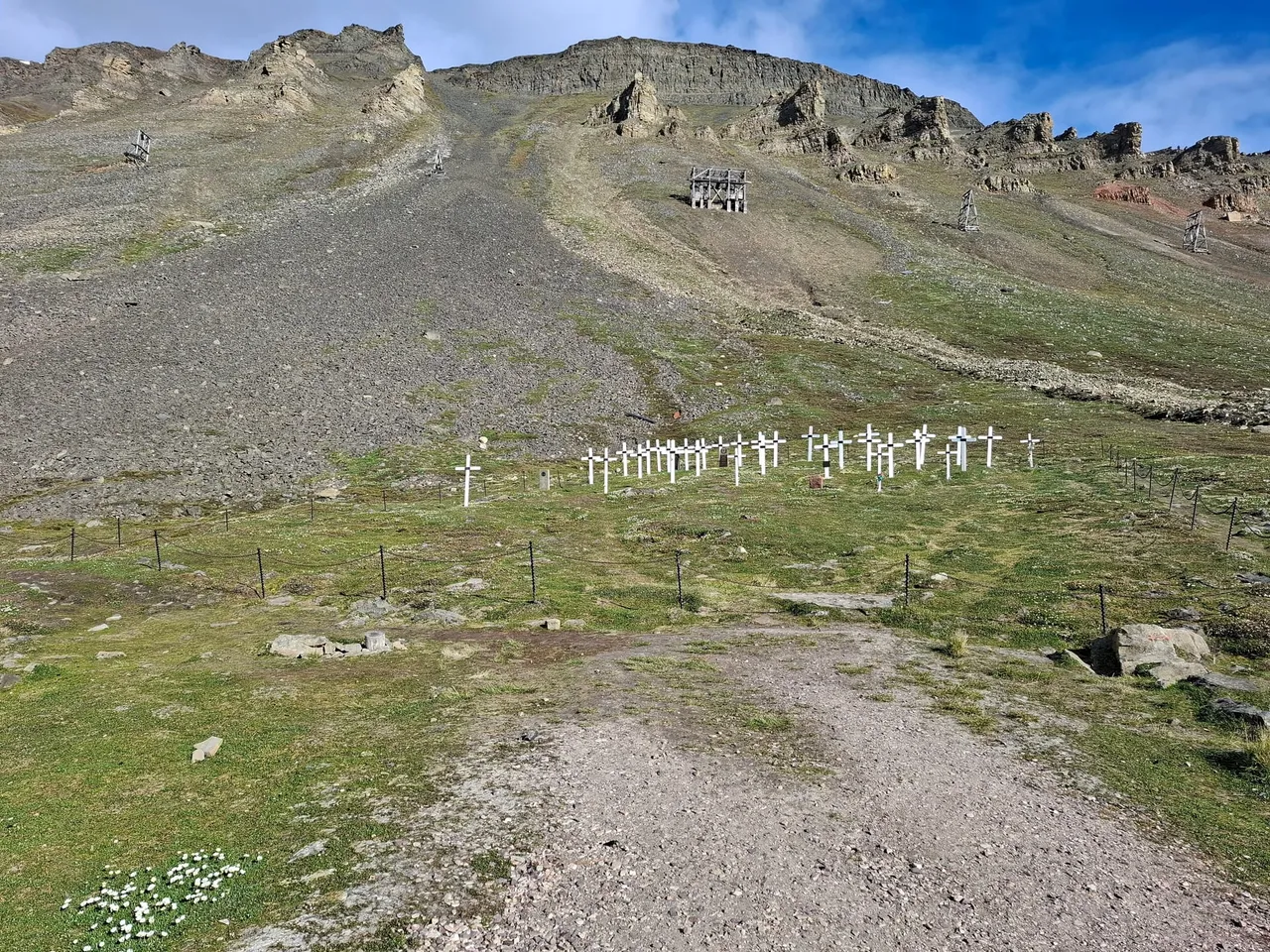
Photo: Kawon Kez Sel, CC0

Svalbard Brewery
The world’s northernmost brewery opened in August 2015, after its founders got a 1928 ban on producing alcohol in Svalbard lifted. It brews with glacier water and is open for guided visits, but you need to buy tickets in advance.
A day in town
- Morning: Svalbard Museum when it opens, then the North Pole Expedition Museum nearby, if it’s open.
- Midday: lunch on the pedestrian street, and Nordover.
- Afternoon: Mine 3 or the cableway centre (book either one ahead), then the church and a walk past the cableway towers and up the valley to Nybyen.
For what to do once you’ve seen the town, from boat trips to dog sledding, see What to do in Longyearbyen.
Practical info
- Getting there
- Everything here is in town, within walking distance, apart from Mine 3 (with hotel pick-up) and the Seed Vault (guided trips only).
- Season
- Year-round. The North Pole Expedition Museum closes from October to January, and the cableway centre is guided tours only from October to April.
- Cost level
- low
- Booking tips
- Book Mine 3, the brewery and winter tours of the cableway centre ahead. Bring a card, not cash. Expect to take your shoes off indoors.
Sources
- https://svalbardmuseum.no/en
- https://svalbardmuseum.no/en/tourist-information
- https://en.visitsvalbard.com/things-to-do/attractions
- https://en.visitsvalbard.com/things-to-do/attractions/museums-and-galleries
- https://en.visitsvalbard.com/things-to-do/svalbard-museum-p3500453
- https://en.visitsvalbard.com/things-to-do/north-pole-expedition-museum-p3500533
- https://www.northpolemuseum.com/
- https://en.visitsvalbard.com/things-to-do/nordover-art-centre-and-cinema-p6615843
- https://en.visitsvalbard.com/things-to-do/spitsbergen-artists-center-p7966153
- https://en.visitsvalbard.com/things-to-do/coal-mine-3-p3500573
- https://gruve3.no/mine-no-3
- https://en.visitsvalbard.com/inspiration/various/cultural-heritage-through-film
- https://en.visitsvalbard.com/inspiration/various/svalbard-global-seed-vault
- https://en.visitsvalbard.com/things-to-do/svalbard-church-p3500473
- https://en.visitsvalbard.com/things-to-do/svalbard-brewery-p3500583
- https://img6.custompublish.com/getfile.php/4869447.2046.bliztiw7ummuwz/210615+Planbeskrivelse+Longyearbyen+kirkeg%C3%A5rd.pdf?return=www.lokalstyre.no
- https://lovdata.no/dokument/SF/forskrift/2008-02-15-153/KAPITTEL_1
- https://polarhistorie.no/artikler/spanskesyken-pa-svalbard/
- https://polarhistorie.no/steder/longyearbyen/
- https://snl.no/Longyearbyen
- https://polarjournal.net/new-cemetery-planned-for-longyearbyen-in-2022/